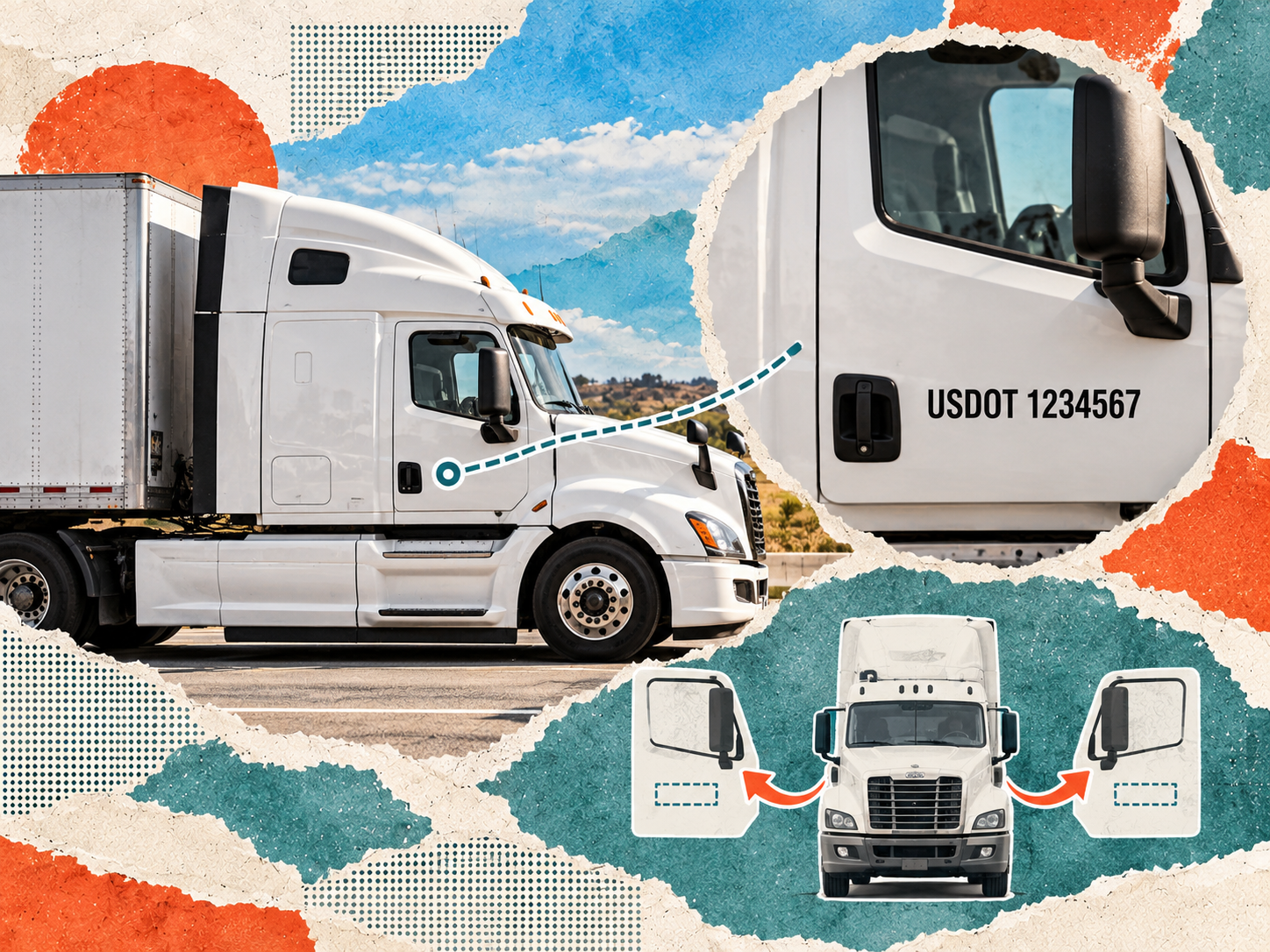
For many motor carriers, a USDOT marking is one of the first things an inspector or another road user can see. The federal rule is specific about the information and visibility of the marking, but less prescriptive about the exact panel or door where it must go. That leaves operators with a practical design question: where can the required information be seen clearly and maintained?
The short answer for covered, self-propelled commercial motor vehicles is: on both sides of the vehicle. A door is often a convenient surface, but the rule does not say “door.” Plan around clear visibility, contrast, and the actual vehicle body.
What the federal rule calls for
Under 49 CFR § 390.21, covered self-propelled CMVs must display the operating motor carrier’s legal name or a single qualifying trade name, along with the FMCSA identification number preceded by “USDOT.” The name must correspond to the name on the applicable FMCSA filing.
The marking must appear on both sides. It must contrast sharply with its background, remain readily legible in daylight from 50 feet while the vehicle is stationary, and be kept in a condition that preserves that legibility. A painted marking or a removable device can be used if it meets those requirements.
These provisions do not apply indiscriminately to every vehicle called a truck. The rule covers self-propelled CMVs subject to the relevant federal safety regulations, and it provides special arrangements for some rented or leased vehicles and driveaway services. State or local rules may also apply. Confirm which rules govern your operation before ordering or installing markings.
Choosing a visible location on each side
Start by viewing the truck from the side, rather than choosing a spot from a close-up photo. Look for a reasonably flat, unobstructed body panel that can carry the complete marking and be seen at a distance. A cab door may work; on a box truck, a clear area on the box side may be more suitable. The regulation requires both sides, not one particular panel.
Before settling on a location, check how the marking will look with the vehicle in ordinary operating condition:
- Keep it away from door seams, handles, hinges, trim, and other details that interrupt letters.
- Avoid placing text across windows, reflective surfaces, or highly patterned graphics.
- Check that side equipment, lift gates, mirrors, or cargo will not hide it.
- Use a background that makes every character contrast sharply.
- Consider whether washing, weather, or routine repairs will obscure or damage it.
Measure the actual usable area on both sides. A truck’s left and right sides may not be identical, and an image mock-up does not account for panel curves, door hardware, or accessories. If you use the same design on both sides, confirm that each copy remains readable when installed.
Keep the carrier identity clear
The identifying information is not interchangeable with a slogan, brand logo, or a driver’s name. Use the operating carrier’s legal name or one qualifying trade name and its FMCSA-issued identification number, with “USDOT” immediately before the number. If another person’s name appears on the vehicle, § 390.21 also specifies how the operating carrier’s information must be identified.
Compare the name and number against the carrier’s current FMCSA records before printing. A correct-looking decal with an outdated business name or wrong number can still create confusion. This guide is general information, not a determination that a particular carrier or vehicle is covered.
A practical installation check
After applying the marking, step back to a distance of 50 feet in daylight and check that the required letters are easy to read while the truck is stationary. Inspect both sides. Then check the surface periodically: a marking that once looked clear may become faded, scratched, dirty, or partly covered.
For the separate federal visibility test and why the rule does not state a universal letter height, see USDOT lettering size requirements explained. For body-style considerations, see the box truck USDOT decals guide.
If you need a made-to-order design, view the custom US DOT truck decal listing on Etsy. DecalsMagicShop is owned by SafeSmart.city’s owner, so this is a commercial link. A product purchase does not establish that a vehicle is covered by the rule or guarantee regulatory compliance; confirm your requirements and installation independently.
Sources
- 49 CFR § 390.21 — Marking of self-propelled CMVs and intermodal equipment, Electronic Code of Federal Regulations.