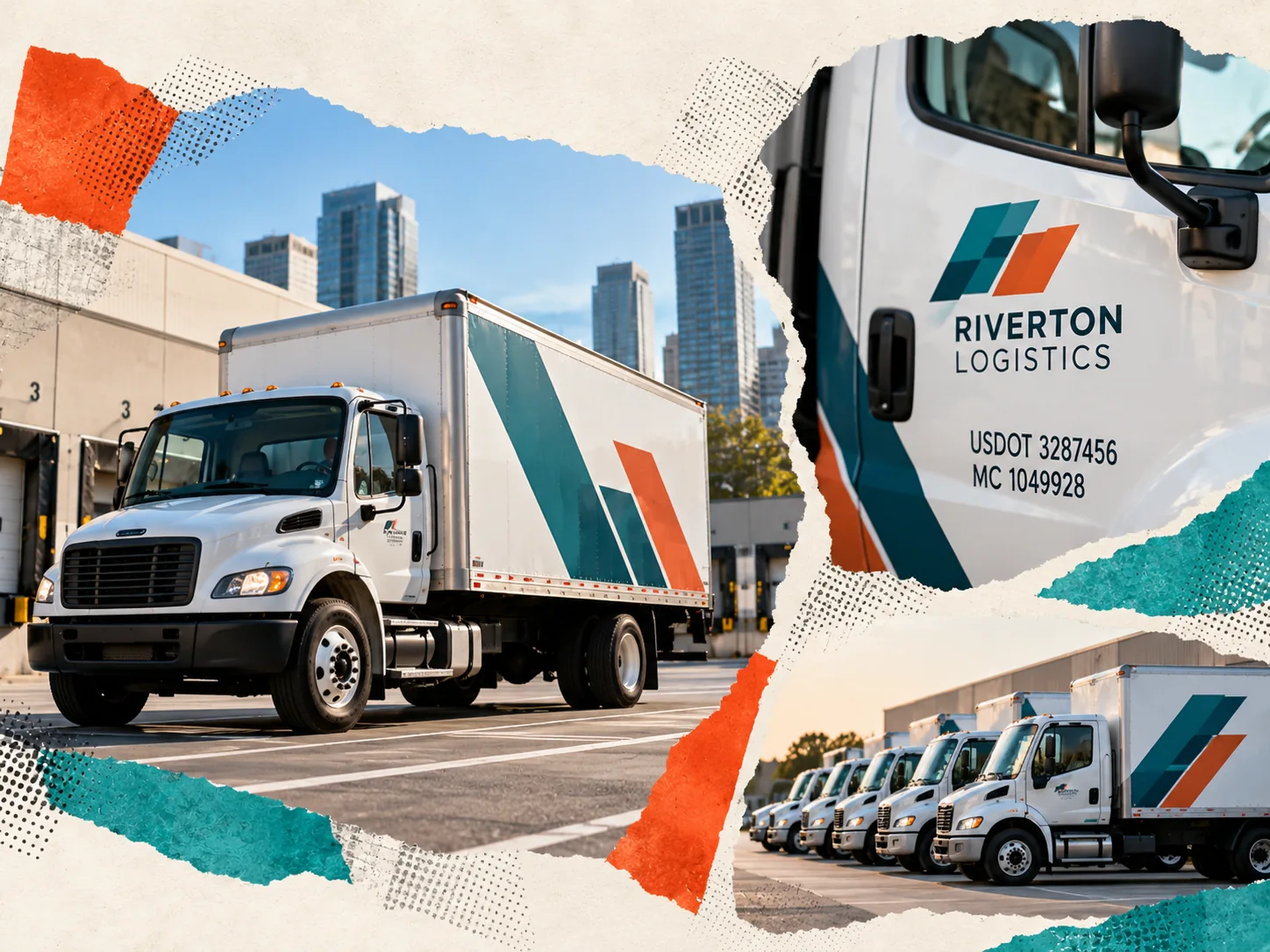
Fleet identity has two jobs that are easy to confuse. A company’s visual brand helps customers recognize its vehicles; carrier markings identify the responsible motor carrier where transportation rules require them. Good fleet programs keep both clear without treating a logo or a decorative wrap as a substitute for legally required information.
Separate branding from required markings
For motor carriers and vehicles covered by 49 CFR Part 390, the federal marking rule in 49 CFR 390.21 specifies identifying information and legibility requirements. Which provisions apply depends on the carrier and vehicle; an operator should check the current regulation and its own circumstances rather than assume every commercial vehicle has the same obligations.
The practical starting point is to verify the carrier’s correct legal name or qualifying single trade name and USDOT number against current records, then review the applicable rule. A vehicle’s marketing name, subsidiary, or customer-facing brand may not be the name that belongs on its regulatory identification. When responsibility is shared or a vehicle is leased, check the rule’s specific provisions instead of guessing from the logo on the door.
Our guides explain two related questions in more detail: where to display USDOT numbers on a truck and USDOT lettering size requirements. For box bodies, see the box truck marking and decal guide.
Design for recognition and maintenance
Once required information is confirmed, a fleet can build a consistent visual system around it. Use a standard layout, keep key text readable against its background, and account for doors, hinges, windows, lights, and body seams before ordering decals. Test the design on the actual vehicle type: a placement that works on a tractor may be obscured on a box truck or service van.
Document artwork versions, approved suppliers, and installation instructions. This makes replacements more consistent after repairs, vehicle transfers, or a change of brand. A simple review at vehicle intake and during maintenance can catch faded, damaged, or outdated identification before it becomes a larger operational problem.
Make identity verifiable
An attractive livery can make a vehicle recognizable, but it does not by itself prove who operates it or whether the operation complies with a rule. Build a review step into fleet onboarding: confirm the company details, identify the rules applicable to the vehicle and trip, check placement and legibility, and record the approval. If multiple entities appear on a vehicle, make the carrier relationship understandable rather than relying on color or a logo alone.
Consistent identification supports day-to-day operations when it is accurate, legible, and maintained. It also helps keep brand design and compliance review focused on their different purposes.
Sources
- 49 CFR 390.21 — Marking of self-propelled commercial motor vehicles and intermodal equipment — Electronic Code of Federal Regulations.
- Where to display USDOT numbers on a truck, USDOT lettering size requirements explained, and box truck USDOT decals placement and design guide — SafeSmart.city.